
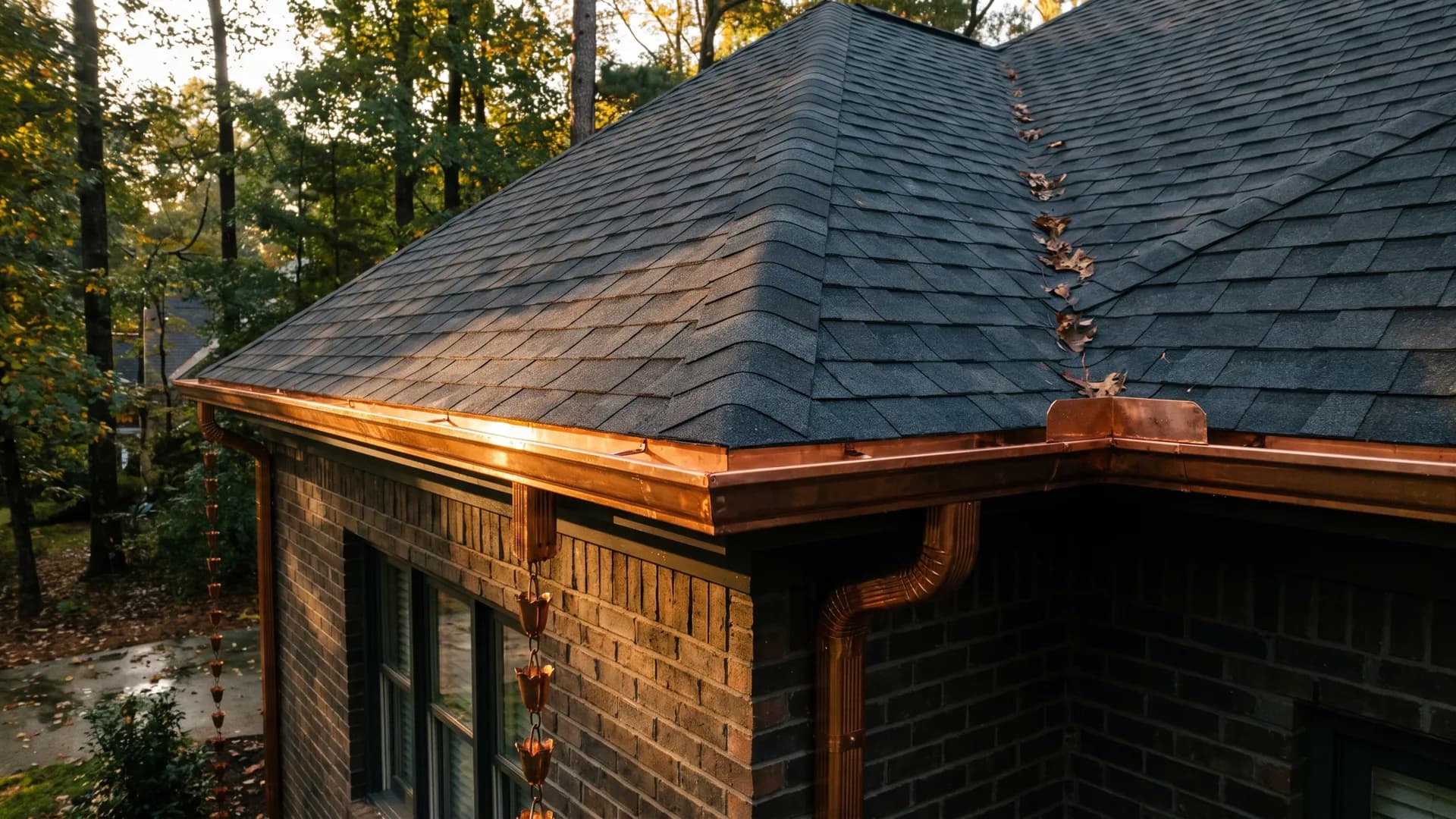
Copper Gutter Installation
Copper gutters shaped and joined for dependable drainage with a finish that develops natural character over time.
See the condition before choosing the work.
ProBYLT plans copper runs, outlets, hangers, joints, and downspouts as one roofline system that fits the property's architecture.
The inspection connects visible symptoms with the surrounding roof or exterior assembly. Product details and installation requirements follow the selected specification.
Conditions worth a closer look.
These signs can point to wear, damage, drainage concerns, or a planned property update. An on-site review determines the relevant scope.
- A restoration project calls for period-appropriate roofline metal
- Owners want exposed drainage components with a natural patina
- Existing copper sections have open seams or damaged runs
- Custom roof geometry needs carefully formed gutter details
- A premium exterior plan includes coordinated metal accents
Follow the connections around the work.
The field details change with the surface, access, selected products, and property conditions.
Follow the work across each meeting point.
The property review and selected specification determine how these parts connect during the service.
- 01Roof edge
- 02Gutter run
- 03Outlet
- 04Discharge
A scope organized around the assembly.
- Roofline survey and copper profile selection
- Run layout with outlets and downspout routes
- Compatible hangers, fasteners, outlets, and formed accessories
- Fitted corners, end conditions, joints, and transitions
- Copper downspouts with planned discharge details
- Surface care and project closeout guidance
Each stage confirms the next one.
The sequence can adjust to the property and the selected system. Visible decisions stay tied to the work they affect.
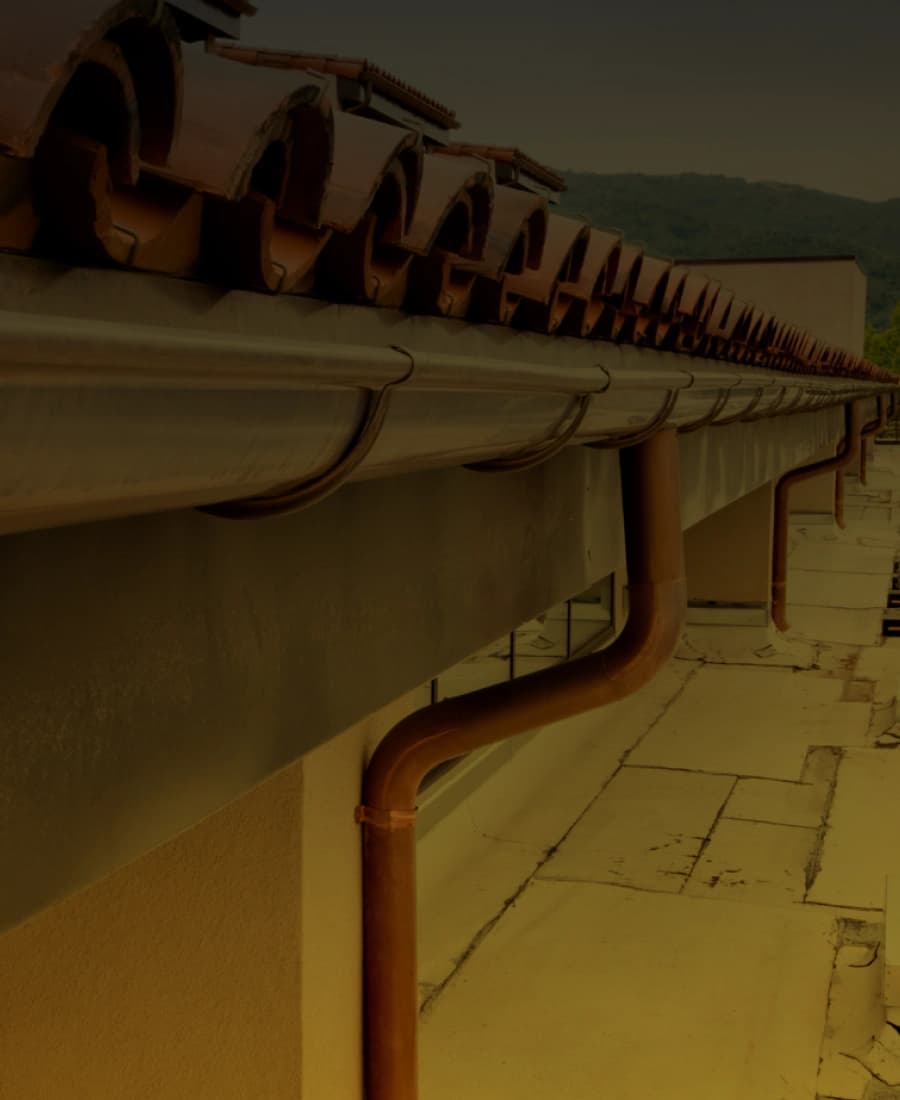
Survey the architecture
- 01
Survey the architecture
Measurements capture roof edges, corners, fascia conditions, valleys, and visible metal details.
- 02
Specify the copper work
Profile, size, accessory style, outlet locations, and downspout paths are defined before fabrication.
- 03
Prepare attachment points
The crew reviews accessible mounting areas and completes approved preparation along each run.
- 04
Fit and join components
Copper sections, corners, outlets, and downspouts are formed and connected for the planned drainage route.
- 05
Review drainage and finish
The final check covers pitch, alignment, joint details, discharge paths, and handling marks.
Useful answers before the inspection.
Why does copper change color?
Exposure to air and moisture produces a natural patina on the metal. Climate and roof runoff influence how the finish develops near adjoining materials.
Can copper touch other metals?
Metal compatibility matters because runoff and direct contact can drive galvanic reactions. The installation plan uses suitable connectors and separation details.
Can copper gutters match an older home?
Profile, downspout form, hanger style, and patina direction can support the architecture. Existing building details guide the visual plan.
How should copper gutters be cared for?
Regular debris clearing keeps drainage open. Finish care depends on the desired surface appearance and the selected copper components.
Keep related work in view.
Seamless Aluminum Gutter Installation
Seamless aluminum gutters formed for the roofline with planned outlets, slope, hangers, and downspout routes.
Open serviceGutter Guard Installation
Gutter protection selected around roof material, tree cover, drainage demand, and the condition of the existing system.
Open serviceGutter Cleaning
Debris clearing for accessible gutters and downspout openings, followed by a review of visible drainage concerns.
Open serviceShow us what the property needs.
An inspection request gives the team a place to begin. Add the service, ZIP code, and the condition you have noticed.
Prefer a call? (470) 975-7337