
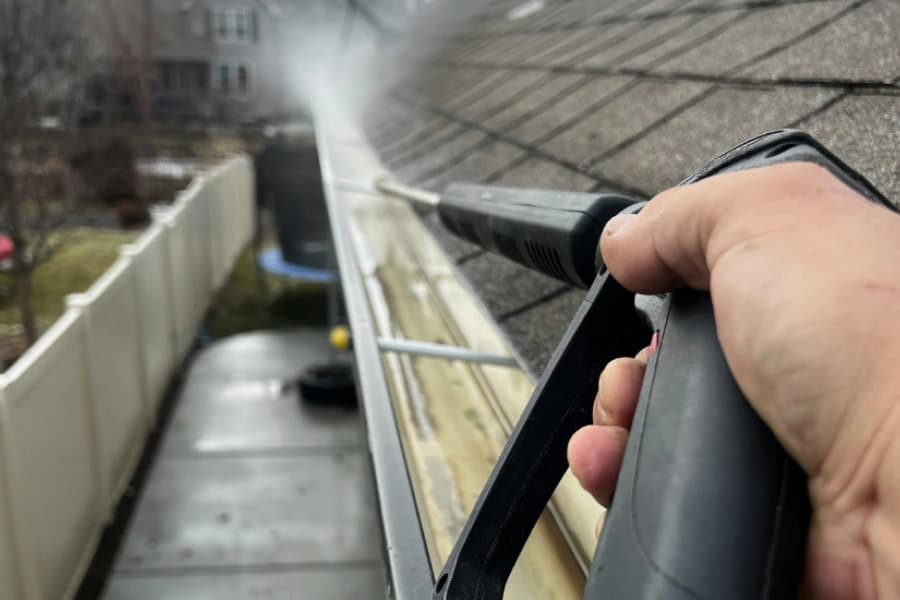
Gutter Cleaning
Debris clearing for accessible gutters and downspout openings, followed by a review of visible drainage concerns.
See the condition before choosing the work.
ProBYLT removes common roofline debris from included gutter runs and checks how water can travel through the visible drainage path.
The inspection connects visible symptoms with the surrounding roof or exterior assembly. Product details and installation requirements follow the selected specification.
Conditions worth a closer look.
These signs can point to wear, damage, drainage concerns, or a planned property update. An on-site review determines the relevant scope.
- Water spills over gutter edges during rain
- Plants or packed debris appear above the gutter line
- Downspouts release a weak or irregular flow
- Gutter runs hold water around blocked outlets
- Seasonal leaf fall has covered roof valleys and eaves
Follow the connections around the work.
The field details change with the surface, access, selected products, and property conditions.
Follow the work across each meeting point.
The property review and selected specification determine how these parts connect during the service.
- 01Surface
- 02Access
- 03Water path
- 04Final review
A scope organized around the assembly.
- Access review around included rooflines
- Removal of leaves, twigs, seed pods, and loose sediment
- Clearing around accessible gutter outlets
- Downspout opening check within the service scope
- Visible review of pitch, hangers, seams, and discharge
- Collection of service debris from work areas
Each stage confirms the next one.
The sequence can adjust to the property and the selected system. Visible decisions stay tied to the work they affect.

Review access and conditions
- 01
Review access and conditions
The crew identifies included runs, ladder locations, overhead concerns, roof edges, and visible gutter damage.
- 02
Remove loose debris
Leaves and common buildup are collected from accessible gutter sections and nearby outlet areas.
- 03
Open the drainage path
The service addresses reachable outlets and checks downspout entry points within the approved scope.
- 04
Review visible components
Hangers, seams, pitch, downspouts, and discharge areas receive a ground or service-level check.
- 05
Clear the work area
Collected debris leaves the serviced roofline and the crew shares any observed drainage concerns.
Useful answers before the inspection.
How often should gutters be cleaned?
Tree cover, roof shape, guard type, and seasonal debris control the schedule. Properties beneath heavy canopy often need more frequent visual checks.
What are signs of a blocked downspout?
Overflow near an outlet can appear with standing water in the connected run. Slow release at the base gives the inspection another clue about restricted flow.
Can cleaning reveal gutter repairs?
A cleared run makes visible pitch, seam, outlet, and hanger concerns easier to identify. Any repair work receives a separate supported scope.
Can gutter guards reduce cleaning needs?
A compatible guard can limit common debris entry. Surface buildup and drainage performance still benefit from periodic review.
Keep related work in view.
Gutter Guard Installation
Gutter protection selected around roof material, tree cover, drainage demand, and the condition of the existing system.
Open serviceSeamless Aluminum Gutter Installation
Seamless aluminum gutters formed for the roofline with planned outlets, slope, hangers, and downspout routes.
Open serviceHouse Washing
Exterior washing adjusted to the siding material, surface condition, nearby landscaping, and drainage path.
Open serviceShow us what the property needs.
An inspection request gives the team a place to begin. Add the service, ZIP code, and the condition you have noticed.
Prefer a call? (470) 975-7337