
Protect the interior first
Move belongings away from active water and place a stable container beneath a safe-to-reach drip. Photographs of the stain can help the inspection later when they include the weather and time of discovery.
Electrical fixtures, bulging ceilings, saturated materials, and falling debris call for distance from the affected area. Emergency services can guide immediate building safety when those conditions are present.
- Record where water first appeared
- Note wind direction and recent weather
- Keep clear of wet electrical components
- Call for trained help around unstable materials
Use the ground for exterior clues
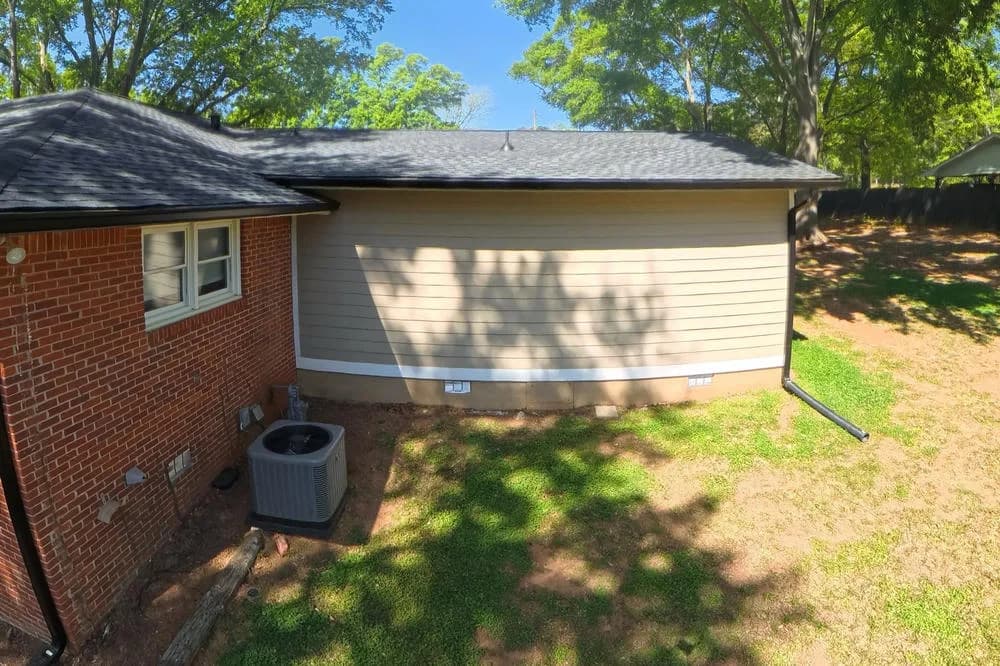
Missing shingles, lifted metal, fallen branches, displaced vents, and gutter debris may be visible from a safe area. A camera zoom can capture useful context while your feet stay on firm ground.
The ceiling mark may sit away from the entry point because water can follow decking and framing. A roof inspection traces the path across nearby slopes and penetrations.
Draw the DIY boundary at roof access
Slope, height, surface moisture, loose materials, wind, and hidden deck weakness can make roof movement hazardous. Repair work also opens an assembly that must shed water after each layer is restored.
Homeowner steps can cover interior protection, photographs, and observations made from firm ground. A trained roofer can evaluate attachment, compatibility, flashing, underlayment, deck support, and adjacent wear.
- Steep or multi-level roof sections
- Storm-loosened covering materials
- Openings near chimneys, skylights, walls, or valleys
- Water entry with an uncertain source
A useful repair scope follows the water path
The written plan should identify the affected covering and any access needed around flashing, underlayment, decking, or ventilation. Compatible materials help the repaired section connect with the existing roof.
Final photographs can document the completed area and any nearby condition worth watching. An organized record also helps if later weather changes the same roof section.
When storm damage may involve insurance, contact the carrier promptly and keep photographs, receipts, claim messages, and temporary-protection records together. The carrier determines coverage under the policy.
Sources reviewed
These primary references informed the safety and installation details in this guide.
- Residential roofing fall protectionOccupational Safety and Health Administration
- Insurance claim tipsGeorgia Office of Commissioner of Insurance and Safety Fire